

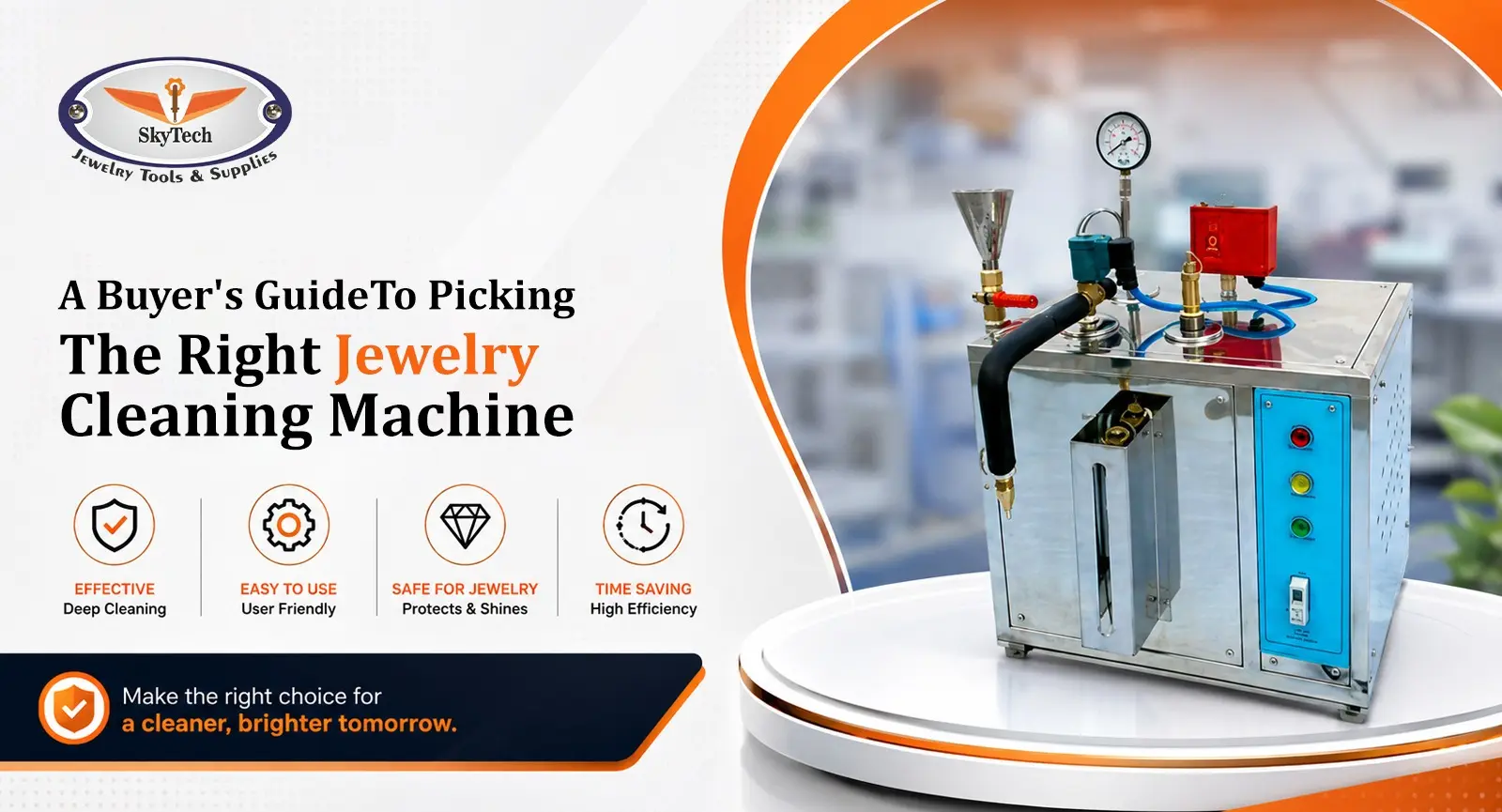
Quick Summary: Picking the right jewelry cleaning machine really comes down to three things: what type of jewelry you’re cleaning, how often you’ll use the machine, and how much you’re willing to spend. A small jeweler working on individual pieces can usually get by with a compact ultrasonic jewelry cleaner. Bulk buyers and manufacturers, though, tend to need something bigger, with more tank capacity and often a steam function too. This guide walks through the different types of machines, what to actually check before buying one, and some straightforward answers to questions buyers usually have.
Table of Contents
Why a Good Jewelry Cleaning Machine Matters
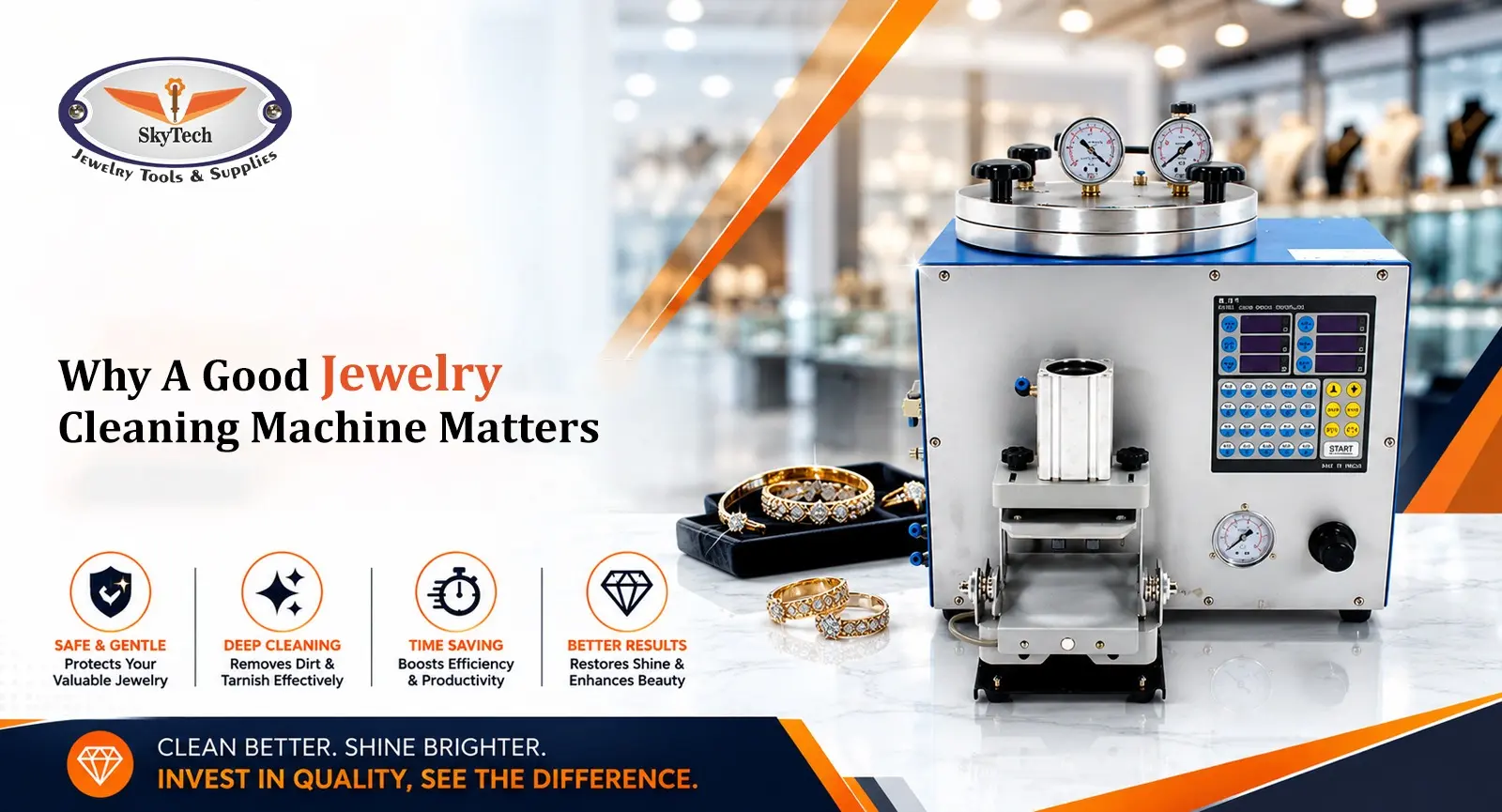
Jewelry doesn’t stay shiny on its own. Over time, dust settles in, skin oils build up, lotion leaves a film, and daily wear just wears the shine down. A decent jewelry cleaning machine takes care of all that buildup without putting stones or metal finishes at risk. For jewelers, this matters beyond appearance — a piece that looks clean and well-kept tends to sell faster, and it says something about how the business is run. For regular buyers, it simply means their favourite pieces keep looking new for years, without having to run to a professional cleaner every few months.\
Types of Jewelry Cleaning Machines
There isn’t just one kind of jewelry cleaning equipment out there. A few different types are commonly used, and which one suits you depends largely on what kind of jewelry you’re dealing with.
- Ultrasonic jewelry cleaners – These use high-frequency sound waves moving through a liquid to loosen dirt stuck in tiny grooves and settings.
- Steam cleaning machines – Pressurized steam blasts away oils, grime, and leftover polishing compound.
- Combination units – Some machines combine ultrasonic and steam cleaning in one, which workshops and manufacturers tend to prefer.
- Magnetic Tumbler Cleaning Machines – Uses tiny magnetic pins and a rotating magnetic field to burnish metal surfaces. Particularly effective for chains, small components, and findings. Leaves a bright, polished finish.
- Rotary Tumbler Cleaning Machines – Uses a rotating barrel with abrasive media to clean and polish multiple pieces at once. Common in manufacturing and bulk processing environments.
- Manual soak-and-brush kits – fine for occasional home use, but not really built for bulk or professional work.
Key Features to Check Before Buying
Before spending money on a jewelry cleaning machine, it’s worth comparing a few things closely. Whether you’re buying one machine for a retail counter or sourcing multiple units for a production workshop, these factors determine whether the machine suits the application:
- Tank capacity — determines how many pieces can be cleaned in one cycle; larger tanks suit bulk use, smaller ones suit countertop retail or home use
- Frequency and power settings – being able to adjust this matters, since sturdy metal pieces and delicate stones don’t need the same treatment. typically 40kHz for general jewelry cleaning; higher frequencies for delicate pieces or thin gemstones
- Construction material — stainless steel tanks last longer and resist corrosion from cleaning solutions
- Timer control — allows setting specific cycle durations; important for consistency across multiple batches
- Heating function — machines with a built-in heater warm the cleaning solution, which improves cleaning efficiency significantly
- Noise level – a quieter machine makes more sense at a retail counter with customers standing around.
- Power rating — higher wattage generally means stronger ultrasonic output and faster cleaning
- Safety certifications – check that the machine meets standard electrical and safety norms, especially for commercial use.
- After-sales support – bulk buyers in particular should confirm spare parts and servicing are actually available.
Ultrasonic vs Steam Cleaners: Which One Should You Pick?
This is probably the question buyers ask most, and honestly, the right answer depends on what you’re cleaning.
Ultrasonic cleaners are the gentler option, and they work well on intricate designs, filigree, and pieces where small stones sit close together. They’re a good fit for daily use behind a retail counter.
Steam cleaners tend to do a better job removing stubborn polishing compounds left over from manufacturing or repair work, which is why workshops and manufacturers usually run pieces through steam before a final check.
A lot of professional setups actually use both — ultrasonic first for a deep clean, then steam for the final shine. If you’re not sure where to start, an ultrasonic unit is usually the safer bet, since it handles a wider variety of jewelry.
Jewelry Cleaning Liquids and Solutions
The jewelry cleaning machine does the mechanical work, but the jewelry cleaning solution does the chemical work. Getting this right makes a significant difference to the result.
Jewelry cleaning liquids are formulated to break down oil, grease, and tarnish while being safe for the metal and stones being cleaned. For most gold and silver pieces, a diluted concentration works well — typically one part solution to ten or more parts water.
Gold jewelry cleaning solution specifically is formulated to be safe on gold alloys, including yellow, white, and rose gold, without stripping plating or affecting the finish. Using the wrong solution — particularly anything acidic or ammonia-based — can damage softer gemstones, certain coatings, or plated finishes.
What to use based on material:
- Gold and platinum — commercial gold jewelry cleaning solution diluted in warm water
- Silver — silver-specific cleaning fluid or a mild commercial jewelry cleaning liquid
- Mixed metals or costume jewelry — mild, pH-neutral solution; avoid harsh chemicals
- Porous stones (pearls, opals, turquoise) — plain warm water only; most cleaning solutions are too aggressive for these
Never use bleach, chlorine, acetone, or abrasive cleaners in an ultrasonic machine — these damage both the machine and the jewelry.
Common Mistakes Buyers Make
- Choosing a machine purely on price, without checking tank size or wattage.
- Not thinking about what’s actually being cleaned — pearls, opals, and emeralds don’t handle ultrasonic vibration well.
- Skipping over the warranty terms and not checking if spare parts are even available.
- Buying something too small for where the business is headed, then having to replace it within months.
- Forgetting to check which cleaning solutions the machine actually works with, since some require specific ones.
Tips for Bulk Buyers and Retailers
Buying jewelry cleaning machines in bulk — for a store, a workshop, or an export business — brings in a few extra things to think about beyond just picking a decent machine.
- Before placing a large order, ask the supplier for one sample unit. It’s the easiest way to judge build quality without committing upfront.
- Order sizes usually affect pricing, so it’s worth checking a few different quantities before settling on one.
- A quick demo or basic training on the machine goes a long way, especially if your staff hasn’t used one before.
- Packaging matters more than people expect, particularly with glass parts or anything fragile. Ask how the supplier ships these.
- It also helps to pick a supplier who keeps spare parts and cleaning solutions in stock, so you’re not stuck sourcing them from somewhere else later.
Going straight to a manufacturer instead of a reseller tends to pay off for bulk orders too. Pricing is usually better, communication is faster, and there’s more flexibility if you need something customized.
Final Thoughts
A good jewelry cleaning machine isn’t just an extra tool sitting in the corner — it saves time, keeps valuable pieces looking their best, and genuinely adds value whether you’re running a jewelry business or just maintaining your own collection. Before buying, think about how often you’ll actually use it, what kind of jewelry you handle most, and how much capacity you really need.
For anyone looking for something reliable and built to last, Skytech Machine Tools manufactures and supplies jewelry cleaning and polishing machines suited for both retail use and larger industrial orders, with consistent quality and support that doesn’t disappear after the sale.
