

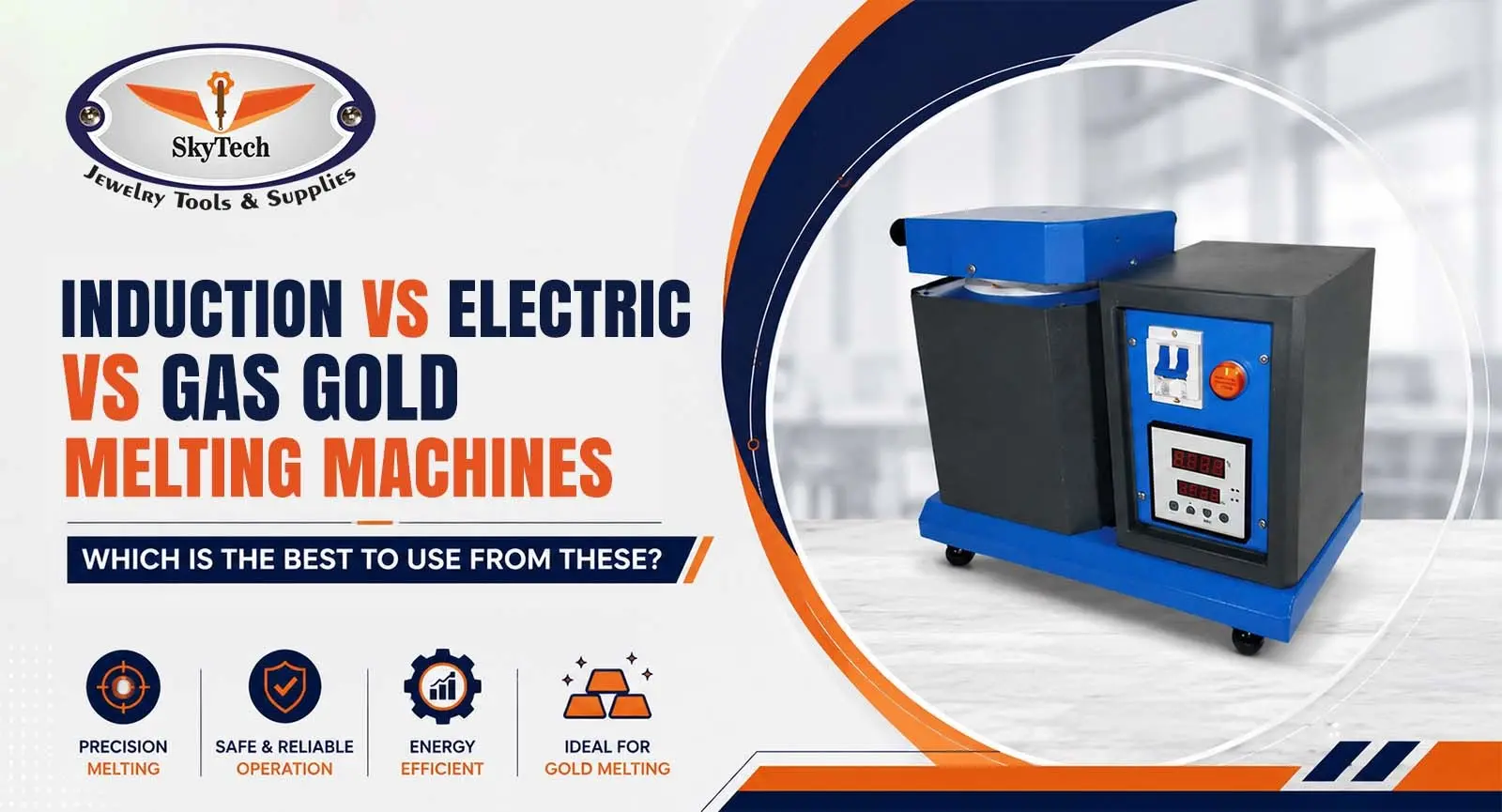
Quick Summary: Ever stood in front of three furnaces wondering which one to actually buy? Every jeweler’s been there. Induction melts fastest with the least waste, electric is easiest to run day to day, and gas works well for bulk melting. All are best in their own and they have different features; it depends on how your workshop runs. This article breaks down all three so you can pick the right Gold Melting Machine for your setup.
Table of Contents
This Blog Covers:
Introduction
Ask any goldsmith what slows down their workday the most, and most of the time, the furnace comes up. Not the design table, not the polishing station, the furnace. Because if melting takes too long, or the metal keeps getting wasted in the process, everything downstream gets affected.
I’ve talked to shop owners who bought a furnace purely because it was the cheapest option on the shelf, and within a few months, they started getting problems because of this furnace. Slow melting cycles, higher power bills than expected, and metal loss that was even noticeable at first.
So it’s not about buying the machine with the most features in it, it’s rather choosing which Gold Melting Machine actually fits how your shop operates, day after day. Let’s go through the three main types so that you can get a clear idea of what these machines are, what their functions are, and then you can decide which one to buy.
What Is a Gold Melting Machine?
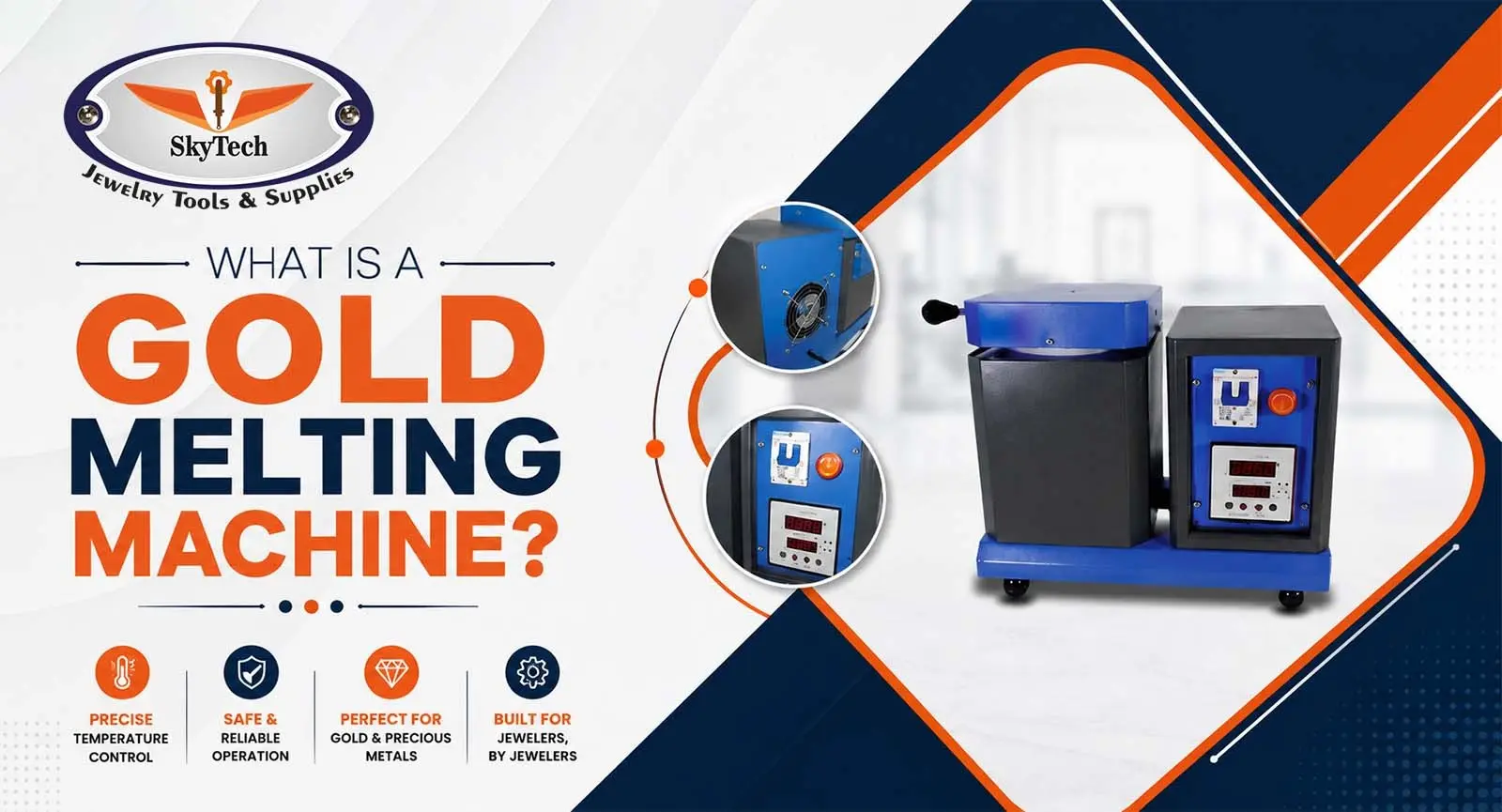
A gold melting machine is equipment that melts gold (and usually silver, copper, and brass, too) so it can be cast, refined, or shaped into something new. What changes between machines is how the heat is produced, and that one difference ends up affecting almost everything else: how fast it melts, how much metal you lose, your electricity bill, and even how much space it takes up in your workshop.
Most jewelry units and refining businesses use this equipment for things like:
- Melting gold to cast rings, chains, bangles, and pendants
- Refining scrap or raw gold before reuse
- Making gold ingots and bars
- Recovering metal in small-scale mining setups
- Reworking old or damaged jewelry pieces
Types of Gold Melting Machines
Induction Machines: The Fast One
How It Actually Heats the Metal?
An Induction Gold Melting Machine doesn’t heat the chamber first and wait for the gold to catch up. It uses electromagnetic induction to heat the metal itself, directly. That’s the reason people say induction is fast: you’re skipping a step that other methods can’t skip.
What Makes It Worth the Extra Cost?
Induction machines usually cost more upfront than the smaller units. But talk to anyone running a busy production floor, and they’ll tell you the extra cost stops mattering within a few months.
A few things that stand out with induction:
- Melting happens within minutes, not a long, drawn-out wait
- Metal loss is noticeably lower than in older methods
- Temperature control is tighter, so you get more consistent results
- It holds up well under continuous, back-to-back melting
If your unit is constantly running batches, barely getting a breather between orders, the induction gold melting machine tends to be worth every rupee spent on it.
Electric Furnaces: The Reliable One
The Simplicity Angle
An electric furnace uses resistance heating, basically, the heating elements warm up, and that warmth melts whatever’s inside. Gold needs to cross roughly 1,000 degrees Celsius to melt, and electric furnaces handle that steadily without much problem.
Why So Many Small Units Stick With Electric?
This is probably the most beginner-friendly option out there. You’re not dealing with gas cylinders, ventilation concerns, or a steep learning curve for new staff. Just switch it on, set your temperature, and it does its work.
What people usually like about the electric furnace gold melting machine:
- Even heating without sudden temperature swings
- Fairly low maintenance compared to gas setups
- Works well across gold, silver, and copper
- Easy enough that new employees pick it up quickly
If you’re running a smaller shop or you’re just getting your business off the ground, this is probably where you’ll feel most comfortable starting.
Gas Furnaces: The Old Reliable One
Still Around for a Reason
Gas gold melting machine furnaces have been part of jewelry manufacturing for a long time, and they’re not going anywhere soon. They use a burning gas flame to generate the heat needed for melting, and plenty of established manufacturers rely on them completely.
Where is the Gas Furnace the Best Choice?
If your workshop is already set up with a gas connection, and you’re regularly melting bigger batches, think 5kg or 10kg at a time, gas furnaces hold their ground well. There’s a comfort factor, too. A lot of older manufacturing units have used gas for years and know the process like the back of their hand.
Things worth knowing:
- Handles larger batch sizes comfortably
- Running costs can be lower where gas is cheap and easily available
- Familiar territory for teams already trained on it
The only catch with a gas Gold Melting Machine is that it needs a bit more hands-on experience to run efficiently, and metal loss can run slightly higher compared to induction or electric if the temperature isn’t watched closely.
Putting Them Side by Side
| Feature | Induction | Electric | Gas |
| Melting speed | Fastest | Moderate | Slower |
| Metal loss | Low | Low | Slightly higher |
| Ease of use | Easy once set up | Very easy | Needs some experience |
| Best suited for | High-volume shops | Small to mid-sized units | Bulk batch melting |
| What you’ll need | Electric supply | Electric supply | Gas connection |
Which One Is Right for You?
There isn’t one best Gold Melting Machine that works for every business; anyone who tells you otherwise is probably trying to sell you something. What actually matters is:
- How much are you melting daily? A shop doing quick, small batches doesn’t need the same machine as a manufacturer pouring gold ingots at scale.
- Your budget, both now and later. Induction costs more to buy, but it tends to pay for itself through lower metal wastage over time.
- How experienced is your team? Electric furnaces forgive mistakes a lot more easily than gas does, especially with newer staff.
Take a moment and actually think through your daily workflow before deciding. It’ll save a lot of time and help you choose the right machine suitable for your work.
Conclusion
None of these three gold melting machines is really the wrong choice; they’re just built for different workshops. Induction saves you money long-term if your production never slows down. Electric keeps things simple if you’re smaller or just starting. Gas still makes sense if it’s already part of your setup and you’re melting in bulk. The smartest move is just talking to Skytech Machine Tools, since they offer all three, so you can pick based on how your shop actually works.
