

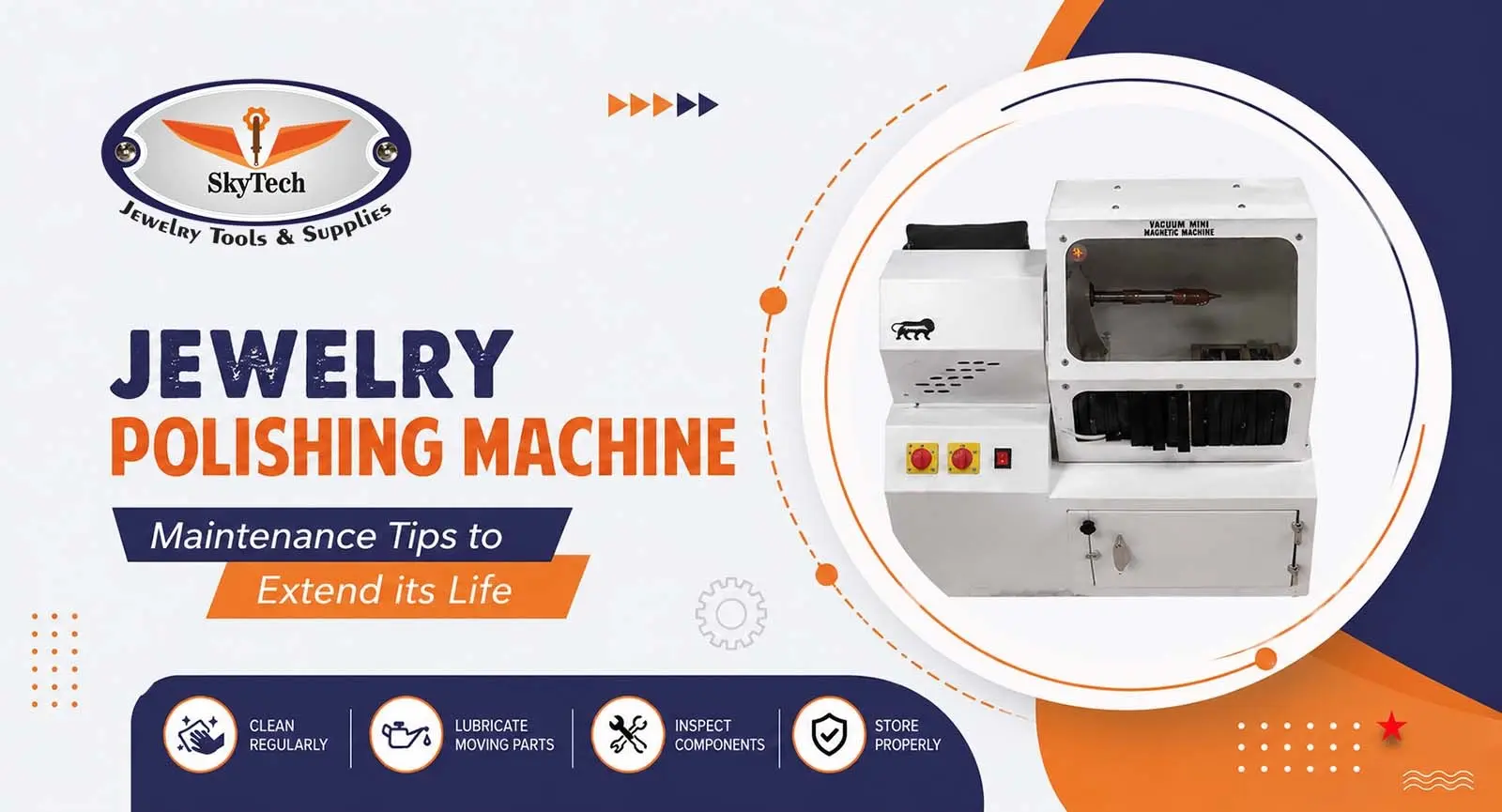
A jewelry polishing machine is the most important tool used by goldsmiths and jewelry manufacturers. The machine gives gold and silver pieces their final, retail-ready shine. It turns dull, raw castings into beautiful, high-value products that jewelry buyers will instantly love.
But because these machines work with sticky polishing pastes, grinding wheels, and flying metal dust all day, they face heavy wear and tear. If you skip regular maintenance, the motor will slowly choke, finishing quality will drop, and the machine will eventually break down out of nowhere. Here are practical, easy-to-follow maintenance tips to keep your polishing machine running like new for years.
Why is Routine Maintenance Important for a Jewelry Polishing Machine?
Here is what starts happening when maintenance gets skipped:
- The finish becomes dull and patchy instead of smooth and even.
- Dust blocks the motor vents and it starts running hot.
- Parts wear out much faster than they should.
- The machine breaks down mid-production when you can least afford it.
- Electricity bills go up because a struggling motor draws more power.
- The machine that should last years starts failing within months.
Daily Maintenance
These take five to ten minutes at the end of each session and prevent a lot of trouble over time.
Wipe down the machine: Metal dust and compound residue end up on the housing, around the spindle, and in any gaps on the Jewelry Polishing Machine body. A quick wipe with a dry cloth keeps this from hardening into something more stubborn.
Deal with the buff before shutting down: Polishing compound left on the buff overnight hardens by morning. A hardened buff:
- Does not apply compound evenly
- Can leave marks on the jewelry surface instead of polishing it
- Reduces the overall life of the buff
Knock off dried residue at the end of each session and check whether the buff needs replacing.
Check the spindle: It takes thirty seconds. Look for:
- Any wobble in the spindle
- Debris caught around the shaft
- Compound buildup near the housing
A clean, properly running spindle is the foundation of consistent polishing results.
Weekly Checks
Once a week, take a bit more time to go over the machine properly.
Clear the ventilation openings: This is one of the most important maintenance tasks — and one of the most commonly skipped. The vents exist to keep the motor cool. Fine metal dust blocks them faster than most people expect.
Use compressed air to blow out what has accumulated. A motor that cannot breathe runs hot, and a motor that runs hot consistently will fail well before it should.
Check the drive belt: If your Jewelry Polishing Machine uses a belt drive, inspect it for:
- Cracking or fraying
- Glazing on the surface
- Uneven tension
A worn belt slips under load, reduces spindle speed, and gives inconsistent results. Keep a spare belt in stock — replacing one takes minutes, but running on a worn belt costs you inconsistent output and additional wear.
Lubricate moving parts Check the machine documentation for which parts need lubrication and what type of lubricant to use. This matters — the wrong product in the wrong place attracts dust and causes more problems than it solves.
Inspect electrical connections Loose or corroded connections cause erratic motor behaviour and are a safety concern. Look for:
- Loose terminal connections
- Any discolouration around connection points
- Signs of heat buildup near wiring
If you spot discolouration, have a qualified electrician look at it before continuing to run the Jewelry Polishing Machine.
Monthly Inspection
Once a month, go further than the weekly routine.
Clean the interior: If the machine has an accessible interior — dust collection compartment, motor housing — open it and clean out what has built up. A month of regular use in a jewelry workshop generates a surprising amount of fine metal particulate inside the housing.
Listen and feel for changes: Run the machine briefly and pay attention. A well-maintained Jewelry Polishing Machine:
- Runs smoothly without excessive vibration
- Sounds consistent — no new rattles or grinding noises
- Reaches the set speed without hesitation
Any change from the normal sound or feel is worth investigating. Catching a worn bearing or a loose component early costs far less than dealing with it after it causes further damage.
Check the dust collection system: If the machine connects to a dust collector, verify:
- The bag or filter is not overloaded
- Suction is still working properly
- All connections between the machine and collector are sealed
A dust collection system that is not working correctly is both a machine issue and a health risk for everyone working nearby.
Polishing Compound — How You Use It Affects the Machine
This is often overlooked as a maintenance topic but has a real effect on Jewelry Polishing Machine condition over time.
Storage matters
- Keep compounds in a cool, dry place away from direct sunlight
- Dried-out compound applies unevenly and builds up on the buff faster
Less is more
- Over-applying compound leads to faster buildup inside the machine
- A light, consistent application gives better results and creates less mess
Use the right compound for the material
- Abrasive compounds for harder metals can damage gold or silver
- Matching the compound to the material also reduces unnecessary load on the machine
Common Mistakes to Avoid
- Using too much polishing compound (clogs buffs and strains the motor)
- Ignoring unusual noises or vibrations
- Overloading the machine with heavy or oversized pieces
- Using wrong-speed settings for the material
- Skipping safety guards while operating
- Using water on non-waterproof parts
- Trying to repair complex motor issues without training
Picking the Right Machine for Your Needs
Maintenance works best when the machine was built to last in the first place. A well-manufactured jewelry polishing machine offers:
- Better motor protection against heat and dust
- More durable spindle and bearing components
- Easier access for cleaning and maintenance
- Clear documentation on care requirements and consumable specifications
Skytech Machine Tools manufactures and supplies jewelry polishing machines built for consistent, long-term use – from individual workshop setups to bulk supply for larger production operations. Equipment that is built properly from the start makes every maintenance effort more effective and every working hour more productive.
Final Word
A jewelry polishing machine is an investment. Treat it well with daily cleaning, weekly checks, and monthly care, and it’ll last years. Simple habits like wiping residue, oiling moving parts, and replacing worn buffs make a real difference. For businesses, this protects your profits. For crafters, it means consistent shine and fewer surprises.
